
 All blog posts By Team • Published on 01/09/2026
What is a multi-agent system and why it changes how you scale operations
What a multi-agent system is, how agents coordinate with each other, and why this approach fundamentally changes any company's capacity to scale.
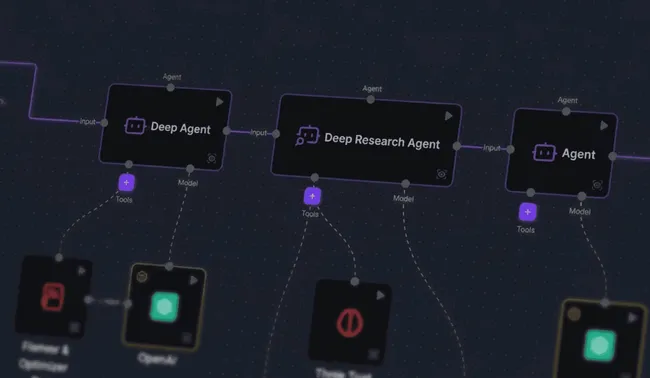
What is a multi-agent system and why it changes how you scale operations
For a long time, when people talked about automating with AI, the mental image was the same: one agent. One intelligent system that receives a task, executes it, and returns a result. Clean, orderly, easy to understand.
The problem is that companies don't work like that. Real processes are messy, cross-departmental, and full of dependencies between teams. And a single agent, no matter how well configured, has a clear limit to what it can manage before it becomes slow, fragile, or simply unworkable.
That's where multi-agent systems come in. And the difference from what came before is bigger than it looks.
One agent alone vs. several agents that collaborate
Imagine you have to manage the onboarding of ten new clients in a week. A single agent would have to handle communications, documentation, coordination with operations, tracking of pending tasks, and updating records — all by itself, in sequence. The more things it does, the more complex its design becomes. Harder to maintain. More likely something breaks.
A multi-agent system solves it differently: each agent specialises in one part of the process. One handles client communications. Another coordinates documentation. Another manages internal follow-up. All working in parallel, sharing information with each other, coordinating without anyone having to orchestrate them manually.
It's not just faster. It's structurally more resilient.
Why this matters for scaling
The real problem with scaling on a single agent isn't the technology. It's that when volume grows, the agent becomes a bottleneck. It has to do more things, handle more exceptions, make more decisions. At some point it stops working well.
Multi-agent systems don't have that problem in the same way. When volume grows, you can add capacity where it's needed without redesigning everything else. If documentation spikes, you reinforce that agent. If communications increase, that agent absorbs the load. The rest stays the same.
According to Gartner, 80% of companies will use some form of AI in their processes in 2026. Those that do it with well-designed systems — modular, with specialised agents — will have a real operational advantage over those doing it with a single agent juggling everything.
How agents coordinate with each other
A reasonable question: if several agents are working at once, who decides what each one does? The answer depends on the design, but the two most common patterns are these.
The first is the supervisor model: there's a coordinating agent that receives the task, breaks it down, and distributes it among the specialised agents. When each finishes their part, the supervisor consolidates the result. Works well for processes with clear steps and defined dependencies.
The second is more decentralised: agents communicate directly with each other, without a central coordinator. One finishes its part and passes the baton to the next. More flexible, but also more complex to design well.
In both cases, what makes the system work isn't the technology. It's the clarity with which each agent's role is defined — what it does, when it acts, and what information it needs from the others.
What changes in practice
A well-designed multi-agent system isn't visible from the outside. The client gets their response, the process moves forward, the team gets the result. What happened behind the scenes — several agents coordinating, processing in parallel, passing context to each other — is invisible.
And that's exactly the goal. At NappAI, multi-agent systems are built so that the complexity stays inside the system and the experience for the team stays simple: things happen on their own, at the right moment, with the right information.
Scaling shouldn't mean adding more visible complexity. It should mean the system absorbs that complexity for you.